
March 1, 2026
Tags
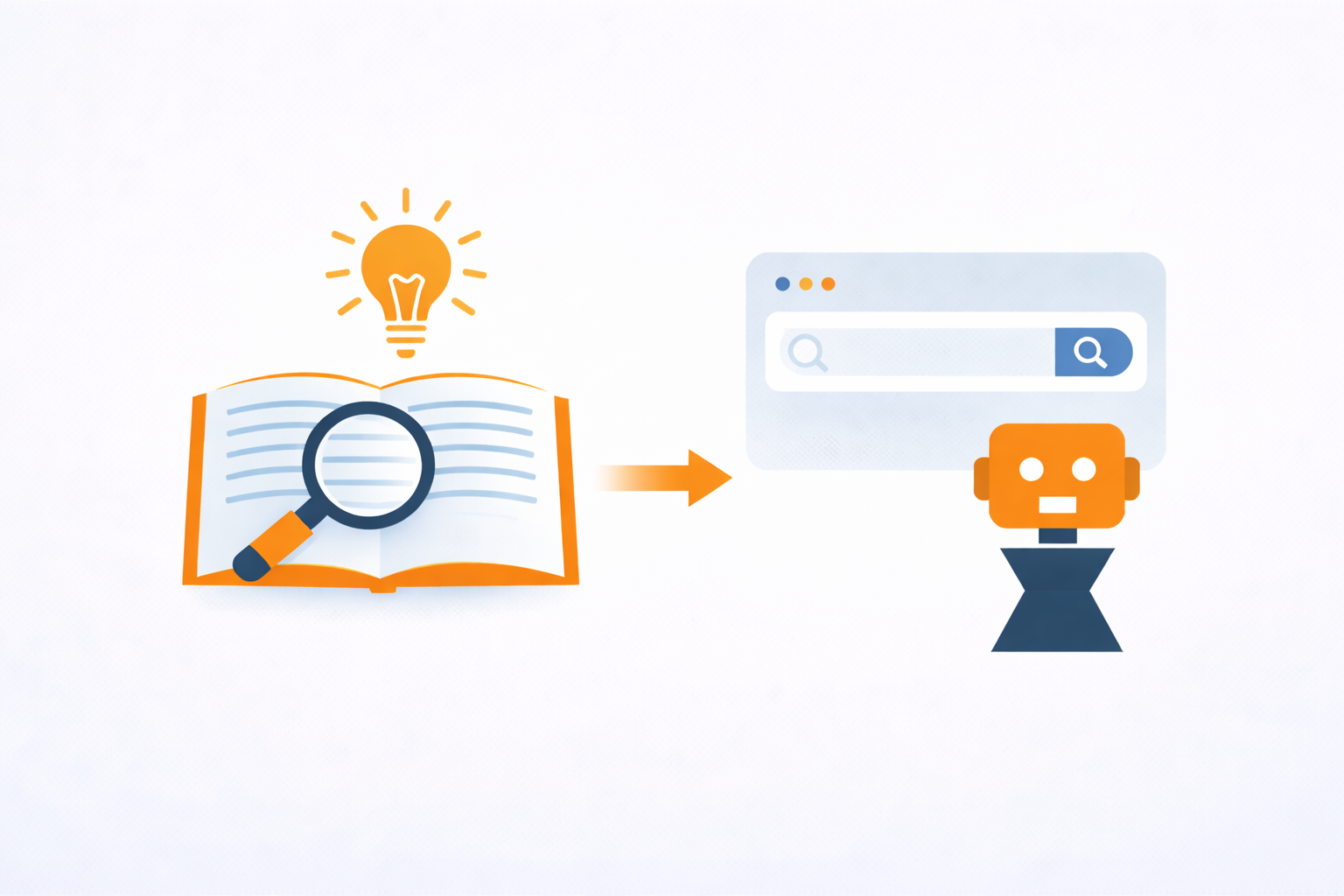
How LLMs Learn (and Why It Matters)
Contributing Author:
Michael B. Snead – Business Advisor @ Metric Centric
For many people, AI can feel like the answer to problems we couldn’t solve before.
It finishes sentences better than your English teacher. It recommends restaurants better than the Michelin Guide. It creates images that no photographer could capture.
AI writes, summarizes, predicts and recommends with remarkable fluency. As AI systems become embedded in how people search, decide and act, it’s easy to assume they understand the world they describe.
But they don’t.
That distinction matters more than most leaders realize.
Large Language Models, or LLMs, don’t think. They don’t reason. They don’t form intent. They learn from what already exists – and reflect it back with extraordinary speed and scale.
They are exceptional at recall and synthesis. They connect ideas, surface patterns and generate responses with confidence. But they do not understand meaning the way humans do. They do not possess judgment. And they cannot originate ideas that have never been expressed.
AI remembers. Humans imagine.
That difference is easy to gloss over, but it has real implications for how organizations show up in an AI-shaped world.
Your content is the textbook for LLMs
LLMs are trained on enormous volumes of text: books, articles, websites, documentation and public conversations.
They don’t learn through experience or reflection. They learn by identifying patterns.
At a fundamental level, an LLM predicts what word is most likely to come next based on everything it has seen before. That prediction repeats, again and again, until an answer takes shape.
What feels like understanding is actually probability.
AI does not “know” things in the human sense. It reflects what is documented. It reinforces what is repeated. It prioritizes what is structured clearly and expressed consistently.
In other words, AI does not learn from your intent. It learns from your output.
Teach LLMs to prioritize your content
This reality shifts the strategic importance of how organizations communicate.
Historically, content was primarily about persuasion – campaigns, storytelling and brand voice designed to influence human audiences.
Today, content also plays a quieter but more foundational role. It defines how intelligent systems understand your expertise, your category and your relevance.
If an organization’s best thinking lives primarily in meetings, slide decks or institutional knowledge that never gets written down, then from an AI’s perspective, it barely exists. If ideas are buried in jargon, scattered across formats or inconsistently articulated, they are harder for both people and machines to understand.
But when your ideas are clear, structured and consistently articulated, they become part of the informational foundation AI draws from.
Help articles, FAQs, product documentation and explanatory content are no longer just support assets. They are part of the material AI systems use to assemble answers.
If you do not clearly explain what you do, how you do it and why it matters, AI will construct an answer from whatever information is available elsewhere.
And that answer may not sound like you.
Ambiguity is a liability
You do not need to understand LLM architecture to respond effectively to this shift. But you do need to ask different questions:
- Are we explicit about what we know?
- Is our expertise structured in ways that are easy to understand and repeat?
- Are we consistently articulating our point of view?
- Or are we assuming clarity without actually creating it?
In an AI-shaped world, silence does not equal neutrality. Silence equals absence.
The organizations that will be most visible in the years ahead will not necessarily be the most technical or the most prolific. They will be the clearest, the most intentional and the most consistent.
If you’re wondering how AI understands your brand today, that’s exactly what we help uncover at Metric Centric. Let’s make sure your expertise is visible to both people and machines. Reach out to us at Metric Centric – and let’s talk.