
March 14, 2026
Tags
The Synthetic Authority Problem: What Do LLMs Actually Know?
Contributing Author:
George Assimakopoulos – Managing Principal @ Metric Centric
Millions of people now treat AI systems as if they are all-knowing sources of information.
They ask a question, get an answer and assume it’s true.
A marketing manager asks an AI assistant to summarize a competitor’s strategy and uses it to inform their own.
A journalist asks it to explain a complicated policy change before relaying it to their readers.
A student asks for help understanding the history of the Cold War before tapping into that knowledge during tomorrow’s exam.
The responses are authoritative and read like expertise.
But here’s the uncomfortable truth: Large Language Models (LLMs) don’t actually know anything.
The answer exposes what we call “the Synthetic Authority Problem” — an emerging crisis of trust that occurs when artificial intelligence is mistaken for human expertise and objective truth.
AI might not know anything inherently, but it can be trained. That’s why organizations must understand which sources are shaping the knowledge AI systems produce.
The Illusion of Knowledge
When an LLM produces a confident answer, it can feel as though the system knows something.
In reality, LLMs do not possess knowledge in the traditional sense.
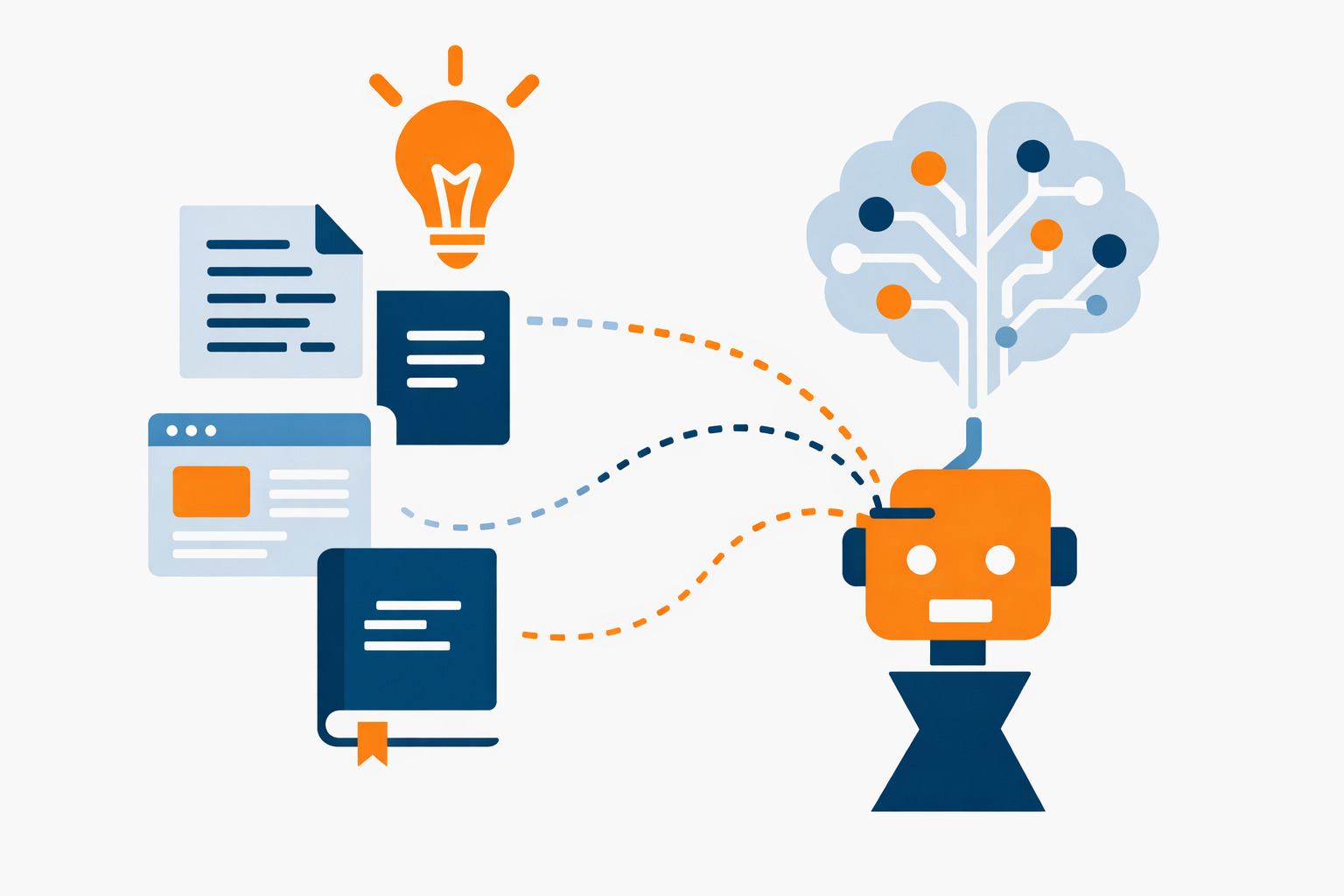
They generate responses based on patterns learned from vast amounts of training data – books, websites, academic papers, documentation, forums and other information sources.
In other words, LLMs are not discovering new information. They are reconstructing knowledge from the sources they were trained on or later retrieve.
That distinction matters.
The reliability of AI-generated answers depends entirely on the quality and structure of the underlying sources it learned from.
Learned Content vs. Claimed Content
One of the most important distinctions in the emerging AI information ecosystem is the difference between learned content and claimed content.
Claimed content is everywhere on the internet. It includes:
- Marketing pages
- Opinion posts
- Brand messaging
- Promotional copy
- Unsupported claims
This content asserts authority but rarely proves it. It often lacks citations, evidence or structured information that can be reliably interpreted by machines.
For decades, this content dominated traditional SEO strategies.
But LLMs treat it differently.
Learned content is fundamentally different. It tends to come from sources that are:
- Structured
- Evidence-based
- Consistently formatted
- Frequently cited by other sources
Examples include:
- Academic research
- Technical documentation
- Government reports
- Well-maintained knowledge bases
- Industry standards
- Reference sites
These sources may not be flashy, but they possess something incredibly valuable: machine-readable credibility.
LLMs gravitate toward these sources because they provide consistent patterns of validated information.
The Hidden Advantage of “Boring” Sources
One of the biggest surprises in the age of AI is that the most influential sources are often the least glamorous.
They are the:
- Standards bodies
- Regulatory agencies
- Technical documentation repositories
- Research institutions
- Data-driven reference sites
These sources rarely compete for attention on social media. They are not optimized for marketing engagement.
Yet they quietly dominate the knowledge supply chain that AI systems depend on.
Why?
Because they are:
- Structured
- Consistent
- Frequently referenced
- Difficult to dispute
In an AI-driven world, boring content often becomes authoritative content.
Structure Matters More Than Ever
Structure plays a critical role in how machines learn. Content that is clearly organized and consistently formatted is far easier for AI systems to interpret and incorporate.
Examples of structured knowledge include:
- Schema markup
- Well-formatted documentation
- FAQs and knowledge bases
- Clearly defined entities and relationships
- Consistent terminology across publications
Structure reduces ambiguity – and reducing ambiguity is essential for machines attempting to synthesize answers from many different sources.
Authority Is Becoming Synthetic
Traditionally, authority was determined by a human reputation: a respected brand, a well-known expert or a prestigious institution.
But AI systems evaluate authority differently. They observe:
- Which sources are cited repeatedly
- Which sources agree with one another
- Which sources maintain consistent terminology
- Which sources provide structured explanations
Over time, these patterns create synthetic authority signals.
This means authority is no longer determined only by human reputation – it is also determined by machine-recognized consistency.
The Strategic Implication for Organizations
For organizations trying to influence how they appear in AI-generated answers, the takeaway is simple:
AI systems do not reward the loudest voice. They reward the most learnable content.
That means organizations should focus on producing content that is:
- Structured
- Evidence-based
- Consistent
- Frequently referenced
- Easy for machines to interpret
In other words, organizations must move beyond publishing claimed authority and begin producing learnable authority.
The Real Opportunity
The Synthetic Authority Problem is not just a challenge – it is also a major opportunity.
Organizations need to invest in:
- Structured knowledge
- Authoritative documentation
- Consistent terminology
- Data-backed explanations
These organizations will quietly become the sources that AI systems rely on. And once a source becomes part of the machine’s knowledge foundation, its influence multiplies across every AI-generated answer built on top of it.
Final Thoughts
As we transition from search engines to answer engines, a new information hierarchy is emerging.
It is not driven by who publishes the most content. It is determined by who publishes the most learnable content.
In this new landscape, the winners may not be the loudest marketers. They may be the organizations producing the most reliable, structured and yes… “boring” knowledge on the internet.
If you’re wondering how AI answer engines are learning about your brand – and whether that knowledge comes from claimed content or truly learnable sources – that’s exactly what we help businesses to uncover. Let’s make sure your expertise is visible, structured and trusted by both people and machines. Reach out to us at Metric Centric – and let’s talk.